
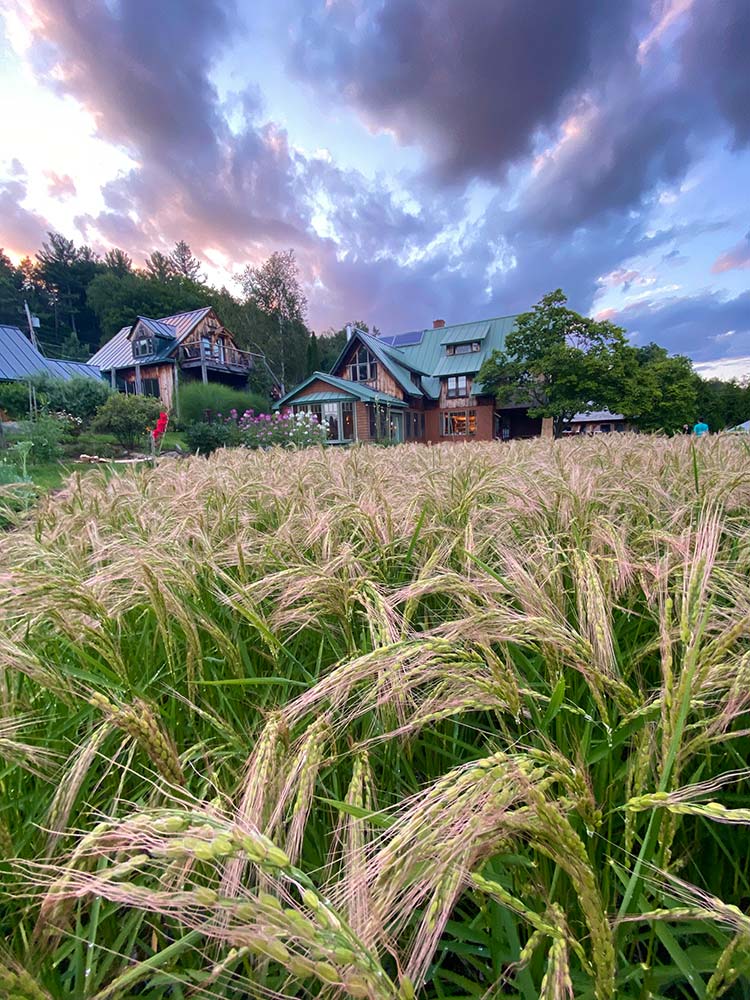
Between the rolling hills and wandering rivers of Conway, Massachusetts, you’ll discover there is a whole lot of heart held in a simple container. Tucked off the side of the road, overlooking a verdant flood plain of the South River, you’ll find South River Miso Company
With roots in Chinese fermented food pastes, miso was developed in Japan, and has been a staple in Japanese cuisine for well over a thousand years. Created through a double fermentation process, miso is made from cooked beans, sea salt, and cultured grain, called koji (steamed grain inoculated with the beneficial mold, Aspergillus oryzae). Here, miso is honored as medicine.
Food as medicine is an ancient wisdom. It’s the simple notion that the process of feeding our bodies is intrinsically tied to our health.
It’s the belief that the fermentation of whole foods unlocks their nutritional and healing potential, allowing our bodies to more easily access those crucial building blocks to provide immune support and strengthen our digestive system. This food is a living legacy, as each new batch is seeded with live miso from previous batches, building on many centuries of wisdom with each teaspoonful.
Christian and Gaella Elwell started South River Miso in 1982, just six years after meeting through their mutual study of Macrobiotics. They studied miso making in California in 1978 with Naboru Muramoto, who had studied under the founder of the macrobiotic movement, George Ohsawa.
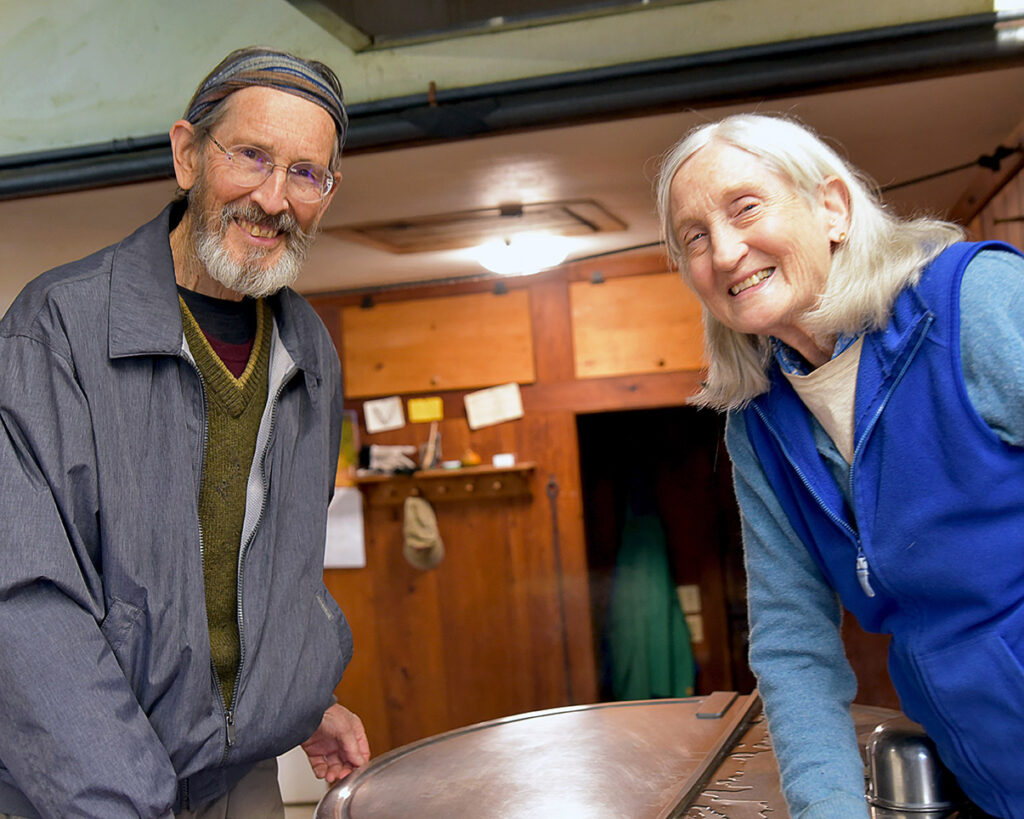
Upon their return to the East Coast, Christian and Gaella became the stewards of their own farmland in Conway. Making the plunge in 1980, they purchased a friend’s start-up, the Ohio Miso Company, for equipment and materials. Then they got down to the hard work of developing their new company. When it came time to choose a name, there couldn’t have been a more fitting namesake than the South River flowing through their property.
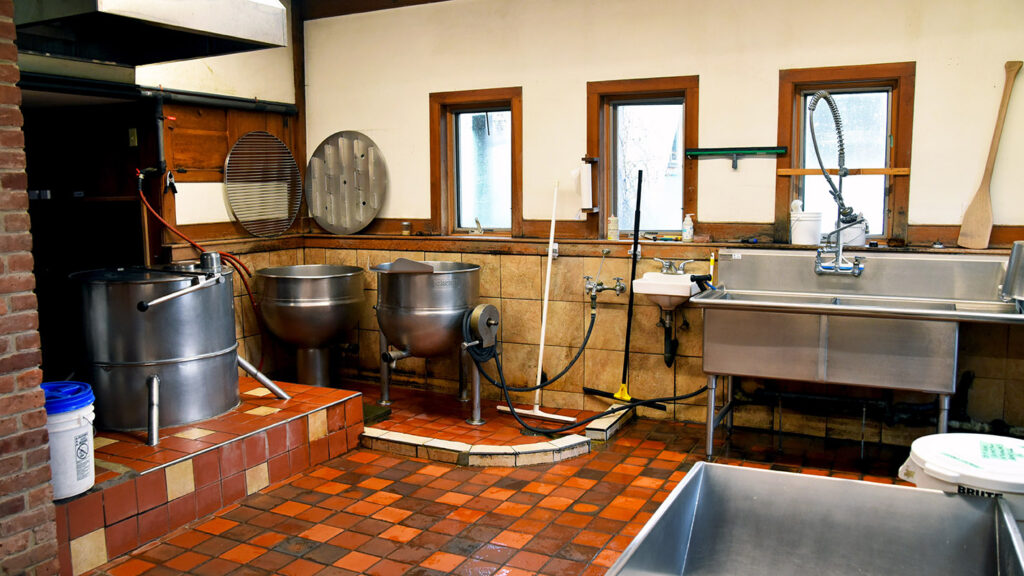
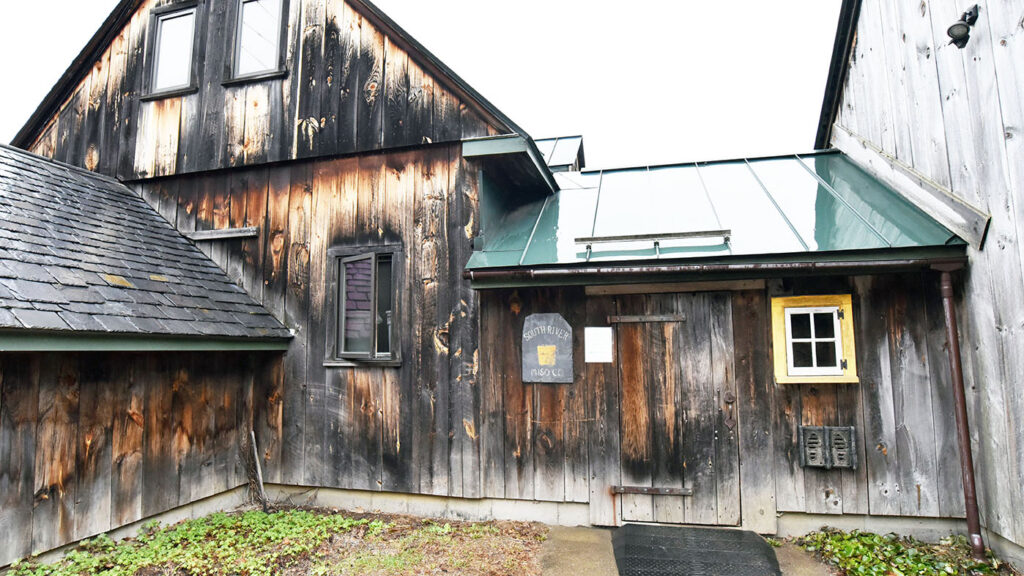
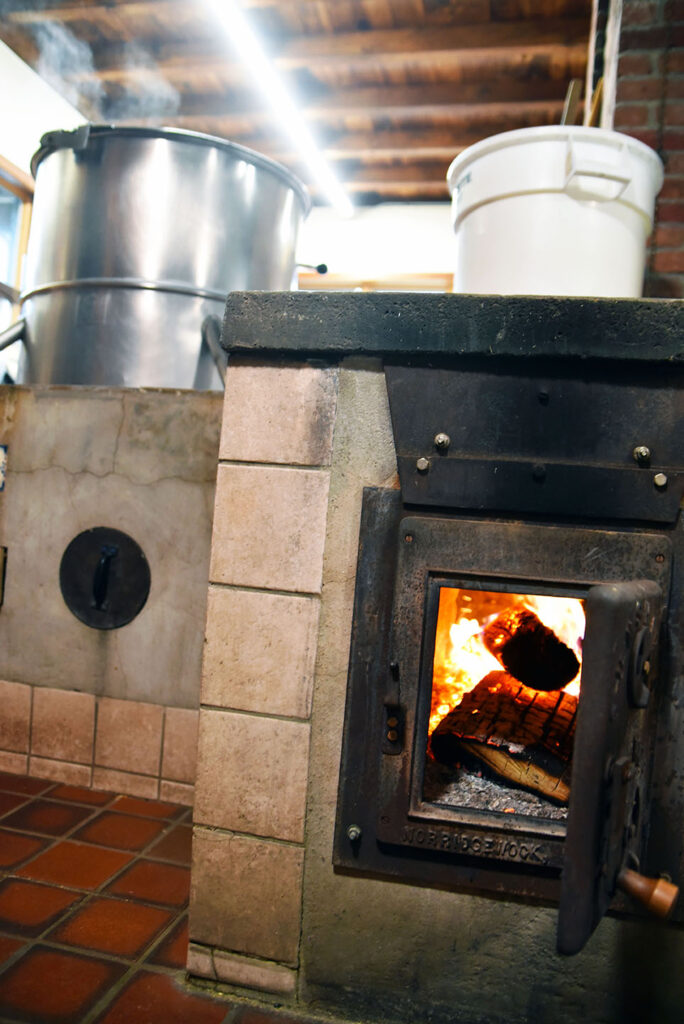
The first steps were to build the infrastructure that would support the traditional methods they wished to employ. They called upon local crafts folk to build their timber-framed workshop with a beautifully integrated masonry wood stove surrounding a cauldron large enough to boil 250 lbs. of beans or to steam 360 lbs. of grain. This stove is the actual hearth and true heart of the shop.
It enables slow, gentle, wood-fire cooking which is one key to the traditional process. From the buildings to their methods, they sought to honor the tradition they were taught: the way you do things matters.
Also from these traditional teachings there is a saying: “body and earth are not two”, which speaks to the idea that the health and spirit of the land and our human well being are inviolably interconnected. In the spirit of this idea, in each batch of rice miso, they include a small amount of rice Christian grows himself on their land.
Also from these traditional teachings there is a saying: “body and earth are not two”, which speaks to the idea that the health and spirit of the land and our human well being are inviolably interconnected. In the spirit of this idea, in each batch of rice miso, they include a small amount of rice Christian grows himself on their land.
These whole foods are the building blocks of many indigenous diets around the world, and miso stands out for both its flavor and health benefits. On both accounts there is power in the fermentation.
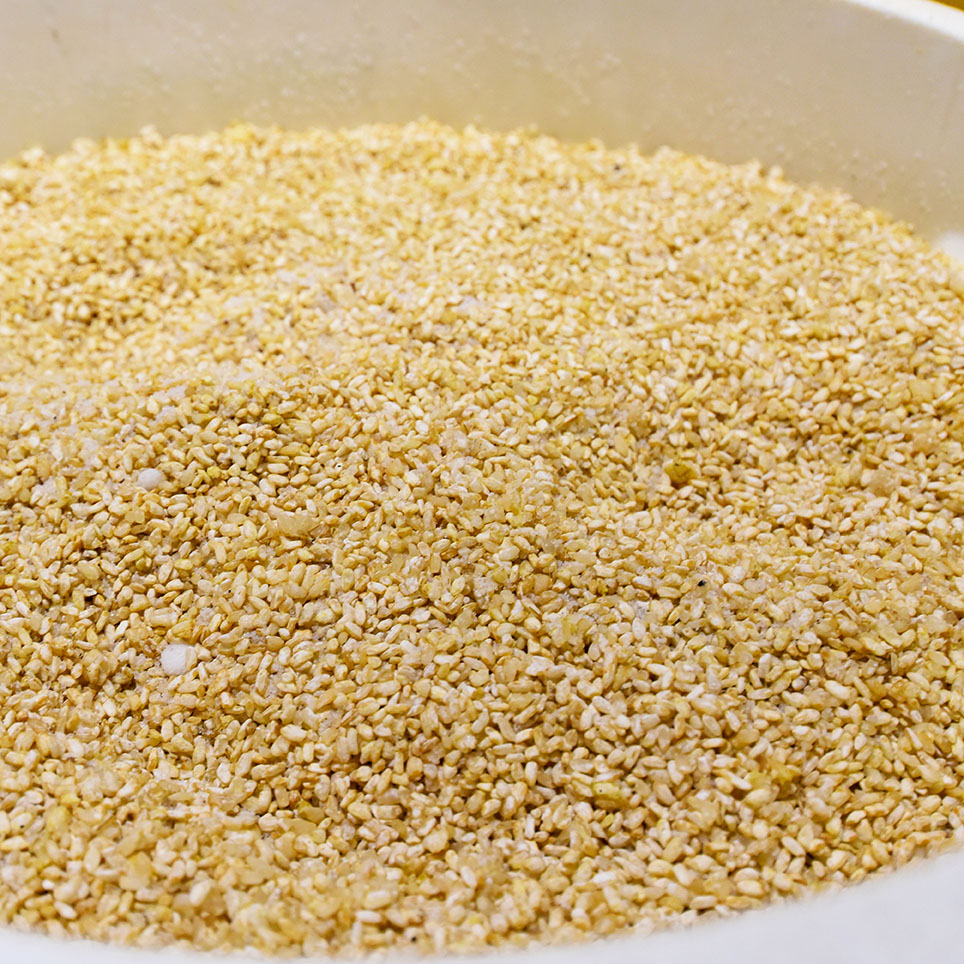
The process of making miso involves two distinct stages of fermentation. First the grain is steamed in the cauldron, and then spread out to cool before inoculating it with the Aspergillus spores to make koji.
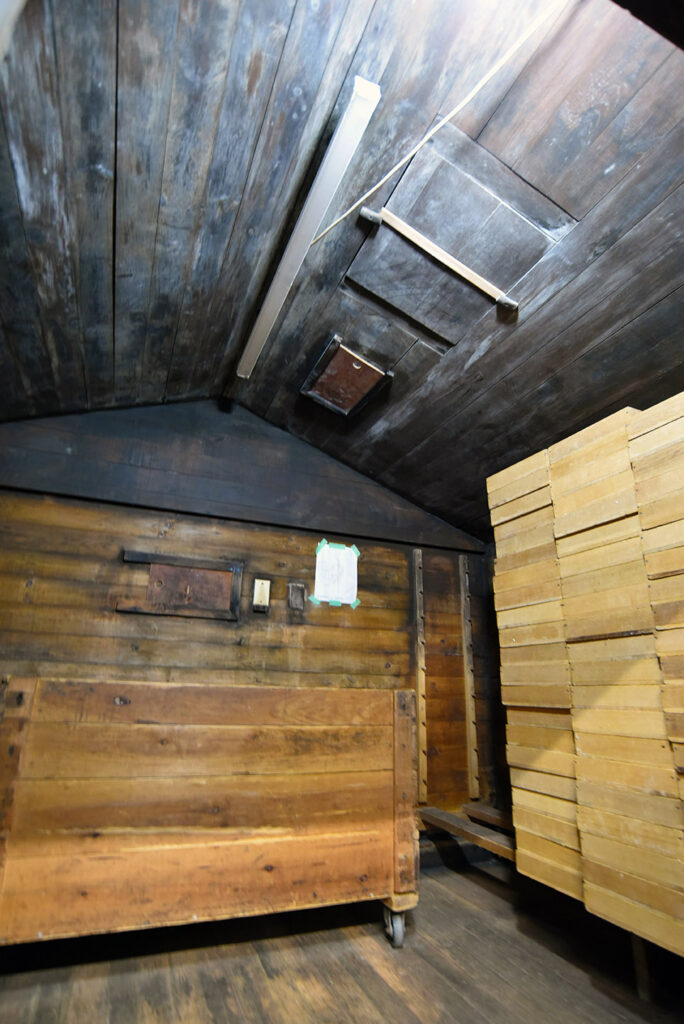
The inoculated grain is ‘put to bed’ in a large wooden, cloth-lined box, called ‘the crib’ where it stays overnight, generating heat as the mold begins to transform the grain into fragrant koji. The following morning the koji is portioned into small wooden trays, as it continues to generate heat, requiring careful monitoring and precise rituals of spreading, stacking, and restacking the wooden trays to dissipate the heat. Starches are transformed into complex sugars as an abundance of digestive enzymes are created. After 34 to 40 hours of active growth, the kōji is finally harvested and mixed with a measured amount of sea salt. This stops the mold’s further growth, but preserves all the beneficial enzymes and nutrients needed for the next stage of fermentation.
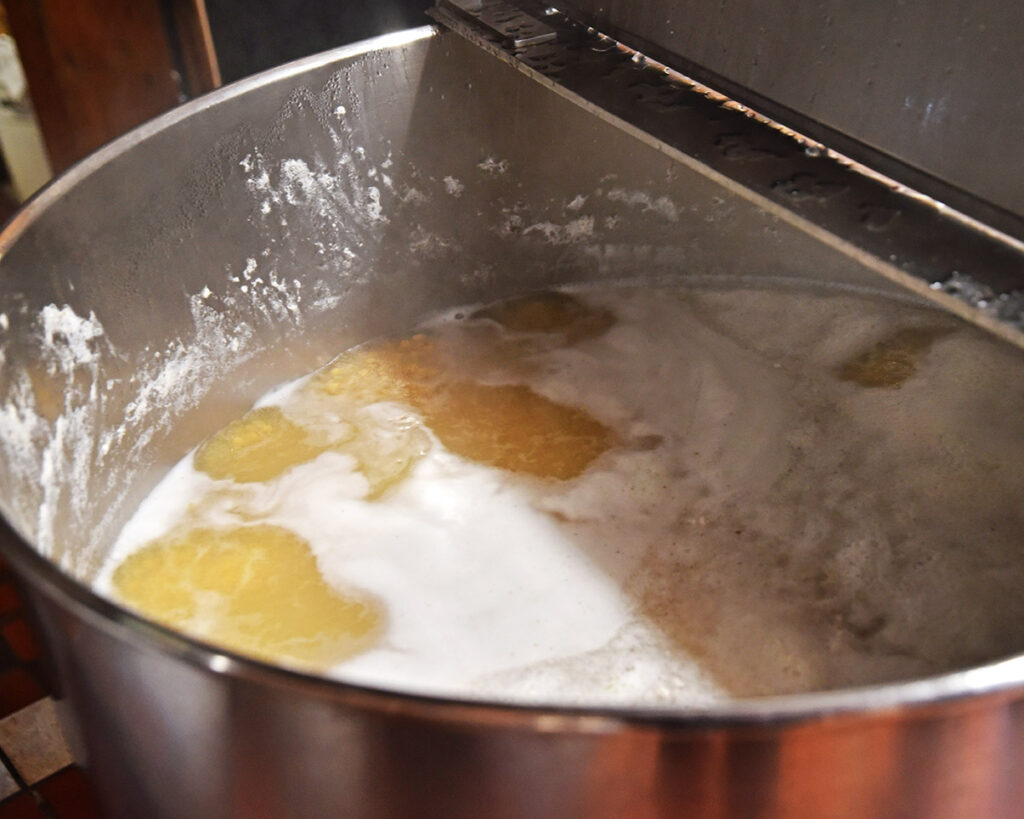
Meanwhile, the beans are cooked in the cauldron by gentle wood fire. The stove is stoked by hand as the beans actively boil for up to seven hours before they are left to slow cook until the next morning. Then, the still steaming beans are poured out into a special stainless steel mixing box. In a magical moment a portion of mature miso from a previous batch is mixed together with some of the bean cooking liquid and spread out over the warm beans.
This connects the new batch with the countless batches of miso that came before it. Then the miso makers begin the treading process, where the beans are mashed and thoroughly mixed with the salted kōji. Now, all the ingredients have come together, and the resulting product is raw miso.
To see their whole process check out their photo essay.
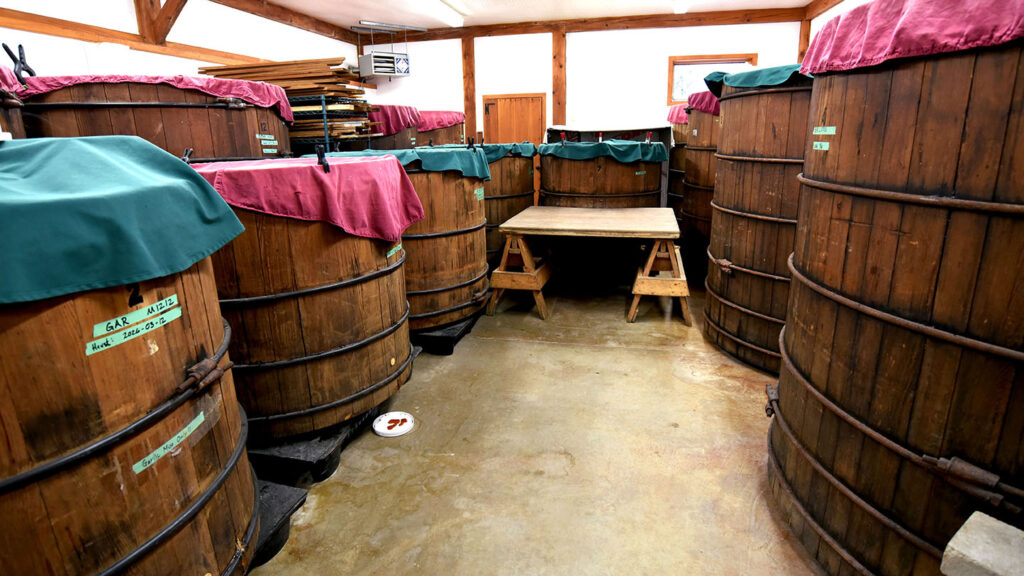
Next, the raw miso is put into large wooden vats, where the second fermentation occurs. How long the miso ferments before being harvested is determined by the proportion of its ingredients, including its salt content.
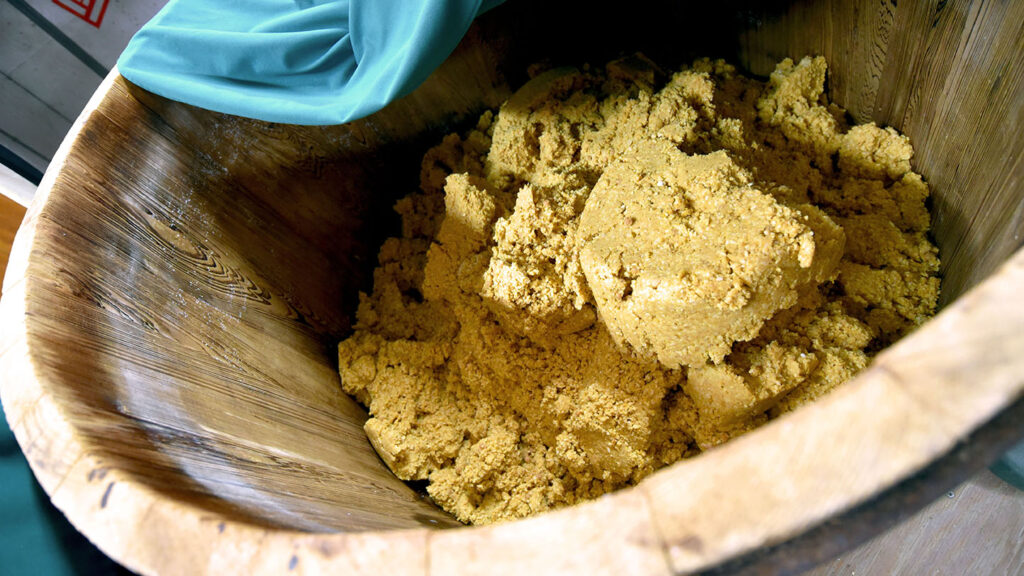
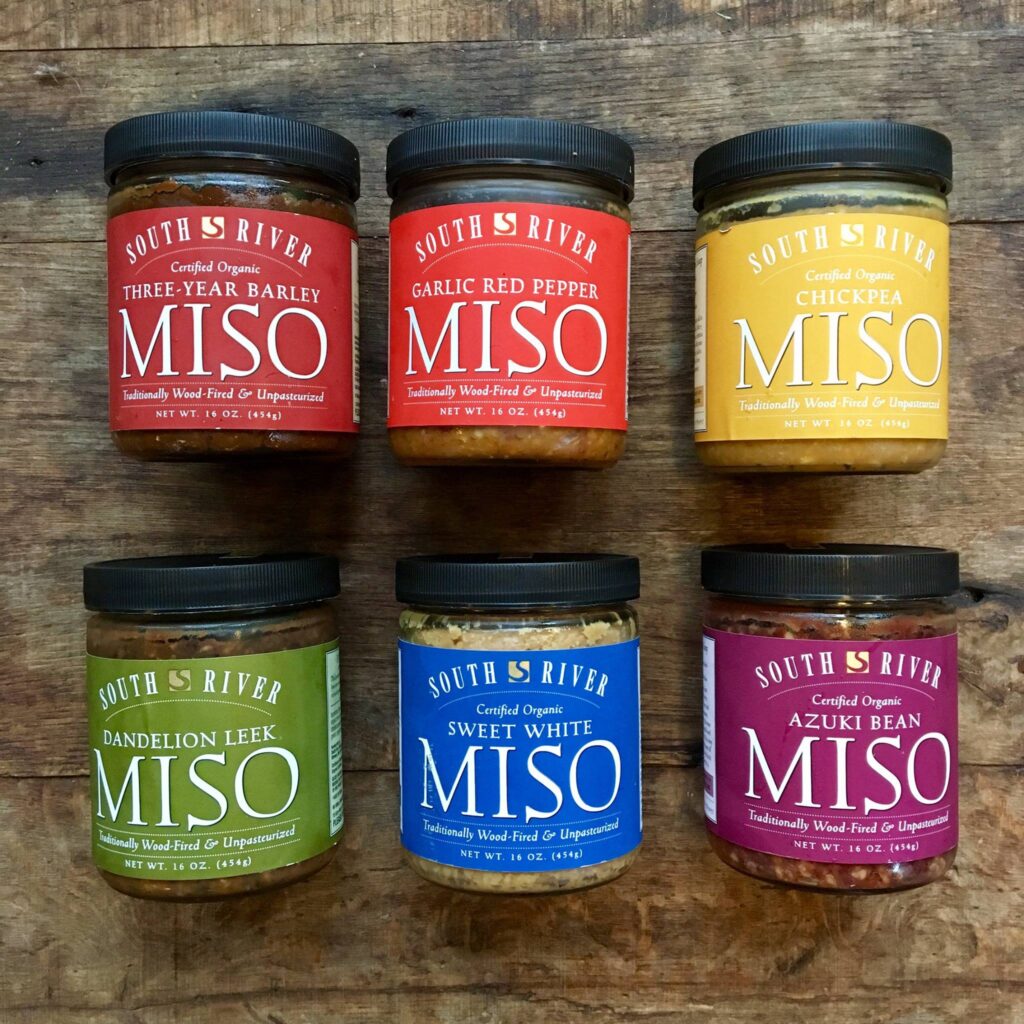
Lower salt, Sweet White Miso is harvested in only three weeks. Other light varieties age for a minimum of three months. Hearty varieties of miso age for up to three years, growing darker and more flavorful with time.
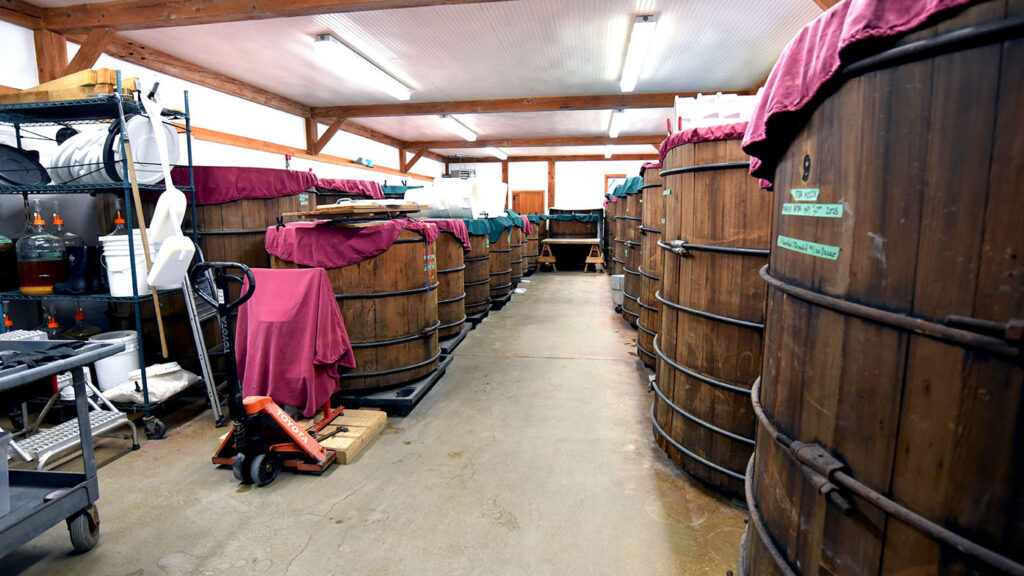
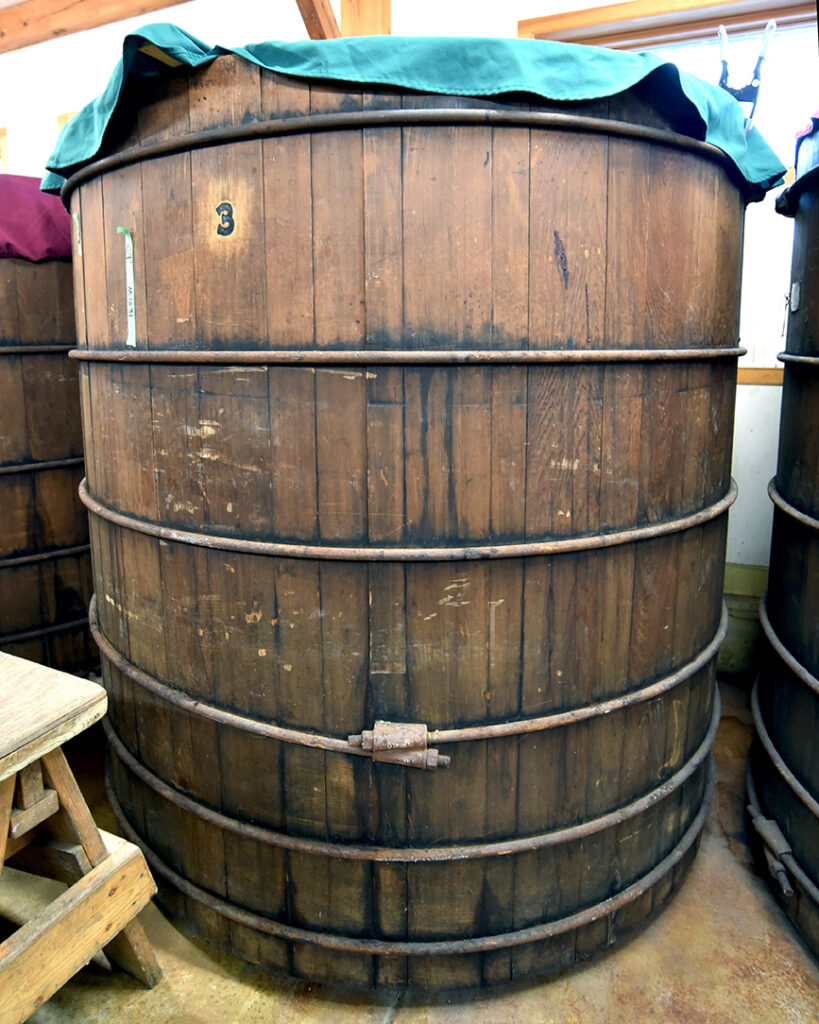
Miso’s strength comes through this human care and through Time itself. In the storage building, the great wooden vats stand still like watchful beings, filled with life, the miso maturing within them destined to be sent out into the world. One teaspoonful at a time, it will offer its own wisdom to many folks near and far. Time lets those enzymes do their work.
Enzymes help us to absorb macro nutrients, like fat and protein. Those enzymes also release amino acids like glutamate from proteins, which is part of what makes miso taste so delicious. Miso is also a great source of Lactobacillus and many other probiotic microorganisms, which strengthen our immune system and give our digestive system a helping hand. As if all this was not enough, the Amylase enzymes, which break down carbohydrates into simple sugars, also give our digestive system access to the essential fibers and other prebiotic fuel found in the whole ingredients. Add a teaspoonful of a light miso to your bowl of oatmeal and watch this process occur in minutes, see their: Porridge Recipe
If you’d like to try some miso you can find it on our shelves at a GREAT price, we’re working with South River Miso to bring you their delicious miso at a lovely 25% off, for a limited time.
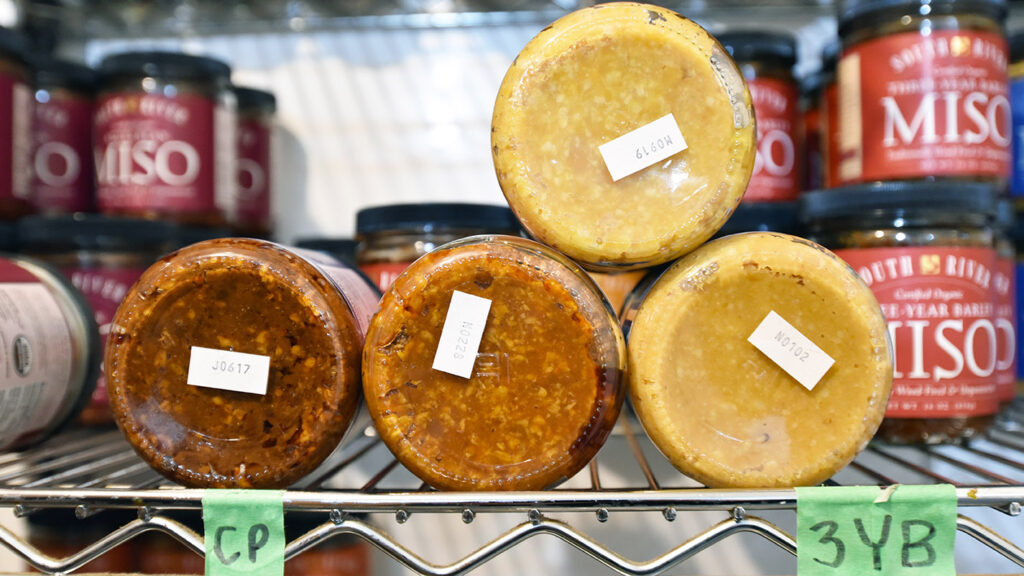
You can also look forward to tasting their miso in the store, at our next Member Appreciation Weekend! Mark June 6th and 7th as days to stop at your local Co-op.
Look for details on A South River Miso Demo forthcoming!

888 Shelburne Falls Road
Conway, MA, 01341
Phone: 413 369 4057
South River Miso Website
Check out their Socials:
Facebook – Instagram